 Laerdal Little Baby QCPR Lungs/ Airways 24pk
 Defibrillator installation – Do you need a professional?
Defibrillator installation, or the installation of a cabinet for a defibrillator can seem daunting for an individual or business that have invested in a life-saving AED (Automated External Defibrillator). In this blog, Defib Warehouse will simplify things and explain how you can easily get your life-saving device ready for action.
Choosing where your defibrillator will be installed
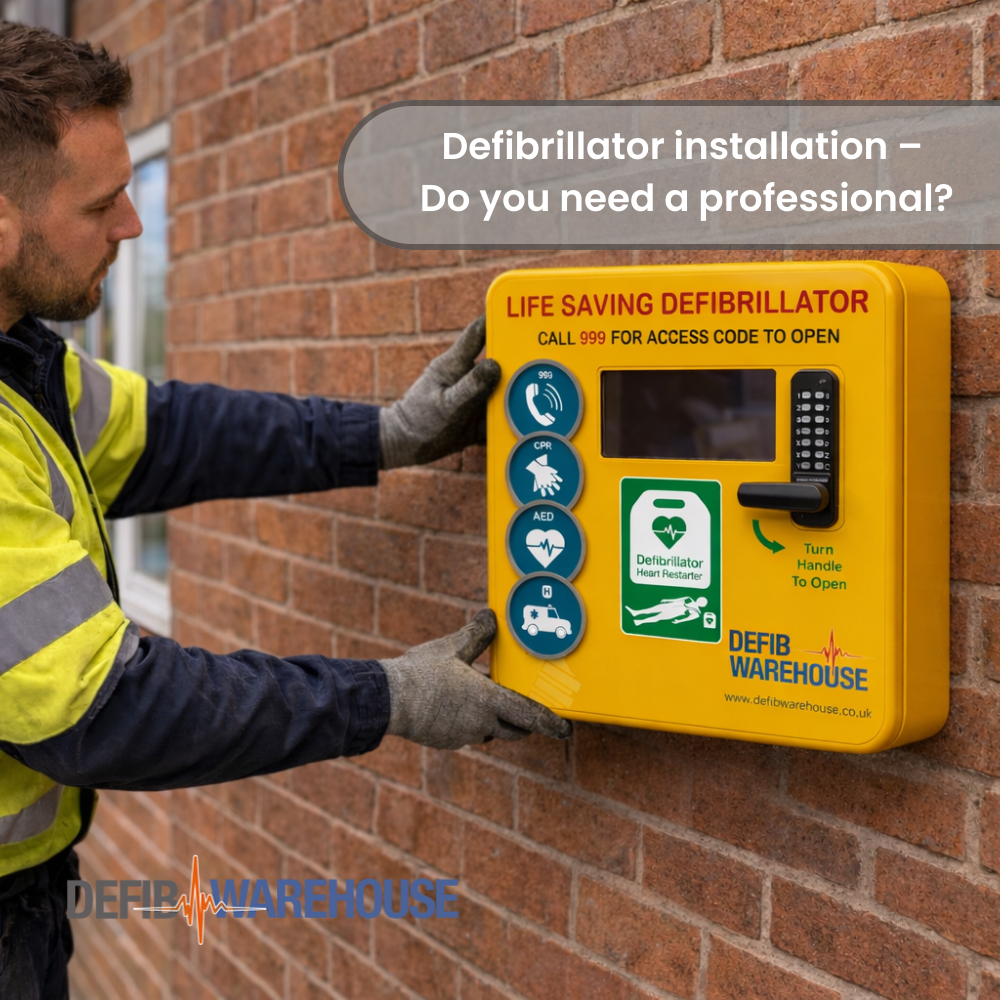
The first consideration in regards to installing your defibrillator is where you want the device to be situated – whether indoors or outdoors. If you want your AED to be stored outdoors, you would need a defibrillator cabinet, which is designed to protect the defibrillator from the elements and only be accessed in an emergency.
If storing the defibrillator indoors, you do not technically need any sort of cabinet, but it is advised to store the device in a secure, highly visible location. There are wall brackets and hangers to store your defibrillator indoors, as well as indoor cabinets that can feature alarms and flashing lights, activated when the defibrillator is deployed.
Storing your defibrillator indoors
If you choose to store your defibrillator indoors, temperature is typically not a concern as defibrillators can operate between 0°C and 50°C. The main concern when placing a defibrillator indoors is visibility and accessibility. You can purchase signs and stickers to make the defibrillator more visible, these can be stuck on walls, doors, floors, or any other surface.
Typically, installing an indoor cabinet, wall bracket or hanger does not require a professional as they are often simply drilled into a wall and require no elecricity source.
Storing your defibrillator outdoors
If your defibrillator is intended for community use, placing it outdoors ensures that it can be accessed 24 hours a day. Outdoor storage requires a specialised outdoor cabinet, these cabinets contain a heating element which ensures the defibrillator does not fall below the effective operating temperature.
Outdoor cabinets must be hardwired into an electricity source to supply the power to the heating element – this must be done by a qualified electrician.
Summing up
To summarise, installing a defibrillator is a straightforward process once you understand the key considerations. Whether your AED is placed indoors or outdoors, the priority should always be ensuring the device is clearly visible, easily accessible, and properly protected so it is ready to use in an emergency.
Indoor defibrillator installation is typically simple and can often be completed without professional assistance using a wall bracket, hanger, or cabinet. Outdoor installations require a purpose-built cabinet and a qualified electrician to connect the heating element, ensuring the defibrillator remains within its safe operating temperature all year round.
By choosing the right storage solution and location, you can ensure your AED is always ready when it matters most. A well-installed and clearly signposted defibrillator can significantly increase the chances of survival during a cardiac emergency, helping you protect employees, customers, or members of your community.