eKomi Gold Seal Rating
FREE Shipping over £100
4.8/5 Rating
Technical Sales team

Cardiac Science Defibrillators

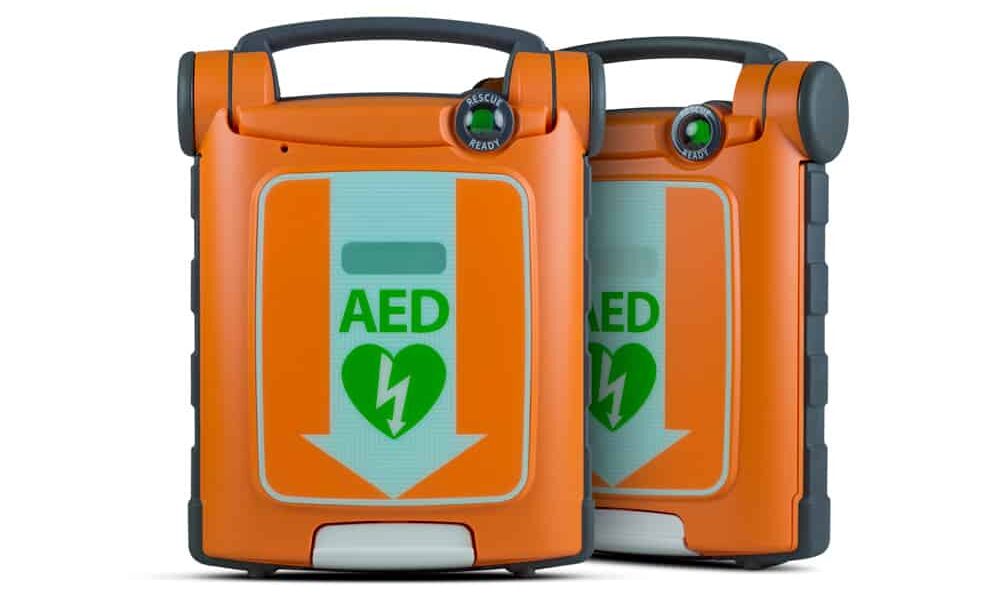
Cardiac Science is globally recognised as a pioneer in automated external defibrillators (AEDs). Known for their innovation, clinical credibility and advanced rescue technology, Cardiac Science defibrillators prioritise ease of use and performance. The Powerheart range, praised for its accessibility in public and workplace settings, delivers trusted shock delivery when it matters most. Defib Warehouse, the UK’s leading online shop for defibrillators, proudly offers Cardiac Science AEDs and expert defibrillator support, ensuring every purchase is secure and informed.

The earliest Cardiac Science company was founded in 1913 by F.F. Burdick and F.A. Anderson. The Burdick Company, as it was then known, developed the first infrared lamp for medical use. The company went on to become a pioneer in electrocardiograph technology and the preferred ECG brand among clinicians – a position Burdick, now a Cardiac Science brand, still holds today.

In 1953, Wayne Quinton teamed with Dr. Robert Bruce, who developed the very first clinical protocol that enabled consistent and repeatable cardiac testing at an elevated heart rate. Quinton invented the first mechanical treadmill expressly designed for this application. Together, the innovations formed the genesis of modern cardiac stress testing.

Cardiac Science, Inc, was formed in 1991 to develop FDA-approved rhythm-analysis software (RHYTHMx), the foundation for the first fully automatic bedside defibrillator. The Powerheart defibrillator was able to treat life-threatening arrhythmias without the need for human intervention. In 2001, Cardiac Science acquired Survivalink and its STAR biphasic AED technology. The company consolidated all AED production under the Powerheart brand and now, with 80 Powerheart patents, these AEDs include some of the most technologically advanced, easiest-to-use features in the field. In 2019 Cardiac Science was purchased by ZOLL Medical Corporation.

Cardiac Science Defibrillators: Models, Specifications & Price Guide

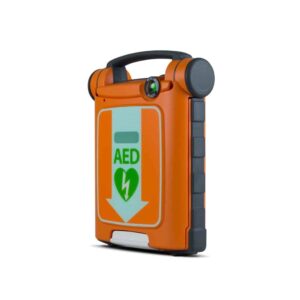
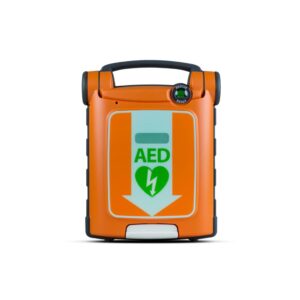
Defibrillators by Cardiac Science offer advanced technology and versatility across a selection of models tailored for various environments. The Powerheart G5 defibrillator is an established favourite, providing a straightforward design and robust performance for use in both business and community settings. The G5 defibrillator also stands out for its range of intelligent features and adaptability.

Key Specifications:

  • Powerheart G5 available in both semi-automatic and fully automatic versions
  • Variable escalating energy (95J - 354J in adult mode; 22J - 82J in paediatric mode)
  • Fast shock delivery, typically under 10 seconds following CPR
  • Choice of standard cardiac science defibrillator pads and Powerheart G5 adult defibrillator pads with CPR feedback device
  • Intellisense® cardiac science defibrillator battery offering up to 4 years of standby life or 420 typical shocks
  • Robust internal data storage and comprehensive automated self-testing

How to Check Your Powerheart G5 Defibrillator

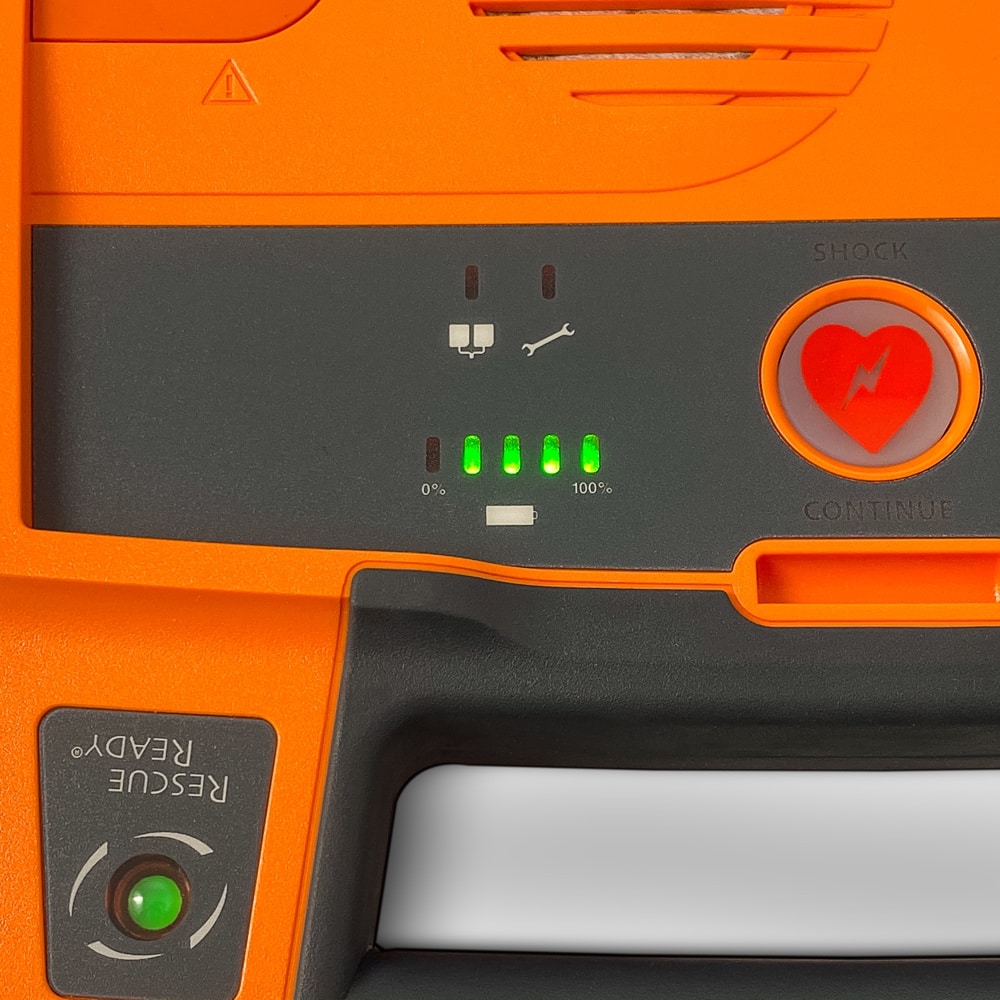
Ensuring your Cardiac Science G5 defibrillator is always rescue ready is straightforward. Begin by checking the Rescue Ready® status indicator, green confirms optimal readiness, while red signals maintenance is required. If a maintenance alert appears, open the lid to review display messages and listen for system alerts. Inspect the battery condition using the Smartgauge™ indicator, and check the expiry date visible through the pad window.

Automatic daily, weekly, and monthly self-tests review internal electronics, circuits, battery integrity, and pad connectivity, ensuring confidence in your AED. Should any indicator show an issue, Defib Warehouse supplies genuine replacement pads and batteries for swift maintenance.

How to Use a Cardiac Science Defibrillator

Every Cardiac Science AED is designed to be intuitive, ensuring life-saving help is accessible for all. Upon opening the AED lid, the RescueCoach™ system provides clear voice and visual prompts. 

To use a Cardiac Science Defibrillator in an emergency: 

  1. Remove or cut any clothing from the patient’s chest and ensure skin is dry before applying pads.
  2. Place the pads as illustrated on the bare chest. The device will automatically assess the heart rhythm and, if necessary, instruct you to deliver a shock or deliver it automatically depending on the model. 
  3. After shock delivery, the AED guides you through CPR, with optional feedback to help maintain correct compression rate and depth. 

These simple, guided steps make Cardiac Science AEDs effective and easy to use in emergencies.

Why Choose a Cardiac Science Defibrillator?

Cardiac Science defibrillators have earned the trust of workplaces, first responders, and public venues worldwide. Their advanced rescue technology, including escalating shock energy and durable design, ensures consistent performance in critical moments. Features like real-time CPR feedback and intuitive operation give even first-time users the confidence to act.

Defib Warehouse supplies genuine Cardiac Science AEDs, pads, and batteries, supported by expert advice, fast delivery, and a commitment to helping save lives across the UK.

FAQs

How long do Cardiac Science AED batteries last?

The Intellisense® battery is designed to last up to four years in standby mode or deliver hundreds of shocks. Lifespan depends on usage and storage, and replacements are readily available from Defib Warehouse.

What does the error code “Cardiac Science G5 maintenance required” mean?

This alert indicates the AED has detected an issue such as battery level, pad expiry, or a system check. Open the lid to review messages and inspect components. Replacement parts and support are available from Defib Warehouse.

How often do Cardiac Science defibrillator pads need replacing?

Cardiac Science defibrillator pads typically have a shelf life of around two years, although the exact expiry date will be clearly printed on the packaging. It’s important to check this regularly, as expired pads may not adhere properly or deliver effective therapy during an emergency. Many Cardiac Science AEDs are designed with visible pad expiry windows, making routine checks simple. Keeping your cardiac science defibrillator pads up to date ensures your device remains rescue ready at all times. Replacement pads are readily available from Defib Warehouse for quick and reliable restocking.

How do I check the battery status on a Cardiac Science AED?

Checking the battery status on a Cardiac Science AED is straightforward thanks to its built-in monitoring systems. The device uses a clear Rescue Ready® status indicator. If it shows green, the AED is fully operational. For more detailed insight, the Smartgauge™ battery indicator displays remaining battery capacity when the lid is opened. In addition, automatic self-tests continuously assess battery performance, helping to identify any issues early. If the indicator changes or a warning is present, it’s a sign the cardiac science defibrillator battery may need attention or replacement.

Can I replace a Cardiac Science defibrillator battery myself?

Yes, Cardiac Science defibrillator batteries are designed to be user-replaceable, allowing you to maintain your AED without the need for specialist servicing. The Intellisense® battery can be easily installed by opening the designated compartment and inserting the new unit, with no tools required. Once fitted, the AED will automatically run a self-test to confirm everything is functioning correctly. Using a genuine cardiac science defibrillator battery ensures compatibility, reliability, and continued device performance.

Are Cardiac Science defibrillators suitable for workplaces and public spaces?

Cardiac Science defibrillators are specifically designed for use in workplaces, public environments, and community settings. Their durable construction, intuitive operation, and clear voice prompts make them suitable for both trained responders and first-time users. Each unit is built to perform reliably in high-pressure situations, helping businesses and organisations meet health and safety responsibilities. This makes them a trusted choice for offices, schools, leisure facilities, and public access defibrillation programmes.
Can a Cardiac Science AED be used on children?

Yes, Cardiac Science AEDs can be used on children when appropriate pads are applied. Paediatric therapy is delivered using dedicated pads or settings, which adjust the energy level to suit younger patients. For example, compatible models such as the Powerheart G5 automatically deliver reduced energy when paediatric pads are connected. Clear voice prompts guide the rescuer through the process, ensuring safe and effective treatment for both adults and children.

Are Cardiac Science defibrillators compliant with UK regulations?

Cardiac Science defibrillators are fully compliant with UK safety standards, including CE marking and relevant medical device regulations.
×