

Why should I buy a defibrillator for at home?
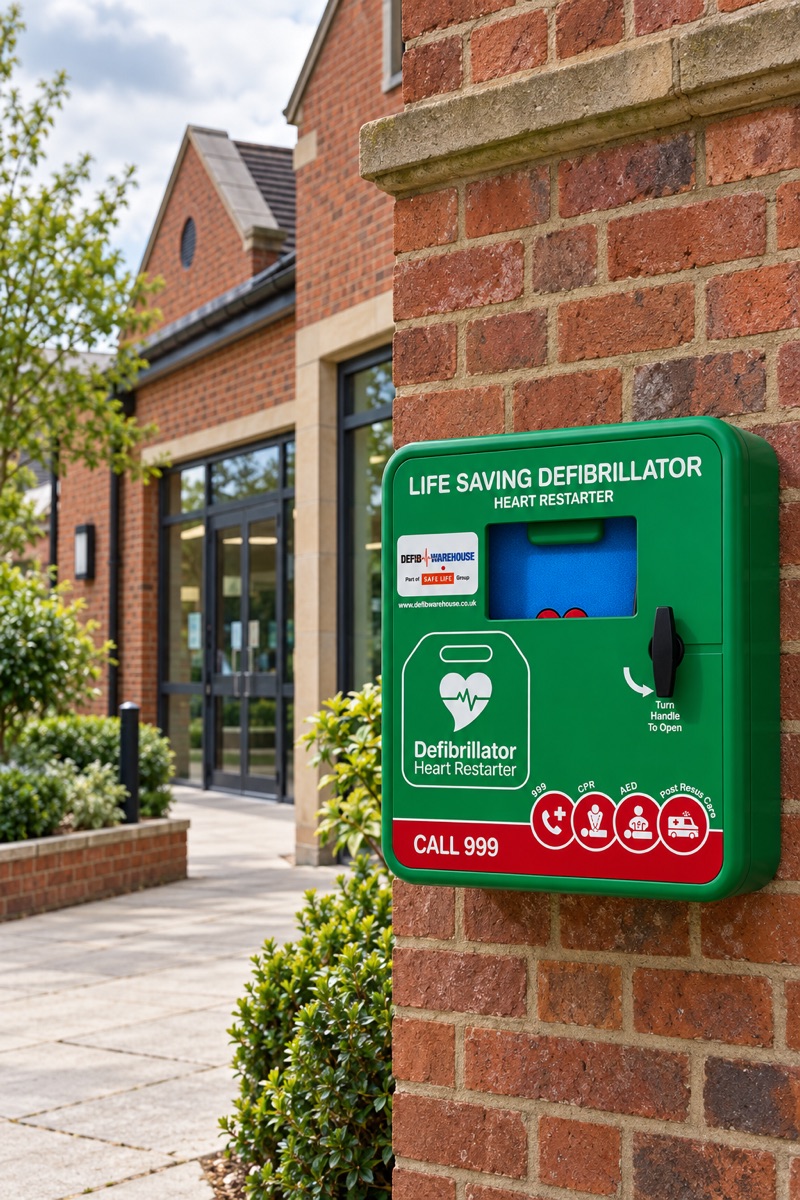
Defibrillators are becoming more and more common in public spaces throughout the UK, but what a lot of people don’t consider is the need for a defibrillator inside the home.
In the UK 80% of cardiac arrests occur in the home, and figures from the European Society of Cardiology show that the nearest defibrillator is a 19-minute round walk from any given postcode in the UK on average. The Resuscitation Council UK advises that a shock should ideally be delivered within 3 to 5 minutes of collapse to give the best chance of a positive outcome.
When someone suffers a cardiac arrest the heart stops pumping blood effectively and the chances of survival decline by 7-10% per minute without CPR and defibrillation.
Why should you consider a defibrillator at home?
While public access defibrillators are becoming more widely available, they aren’t always close enough to make a difference in an emergency.
Many are located in workplaces, schools, shopping centres and other public spaces, meaning they may be difficult to access when someone suffers a cardiac arrest at home, particularly during the evening or overnight.
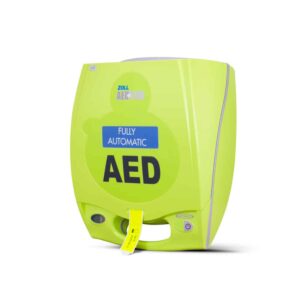
Having an automated external defibrillator (AED) at home means potentially lifesaving equipment is immediately available when it’s needed most, rather than relying on someone travelling to retrieve the nearest public device.
This can be particularly important for households with someone at increased risk of sudden cardiac arrest, such as those with certain diagnosed heart conditions or a previous cardiac arrest.
However, cardiac arrest can also happen unexpectedly, including to people with no previously diagnosed heart condition.
Can anyone use a defibrillator?
One of the most common misconceptions about defibrillators is that you need medical training to use one.
In reality, modern AEDs are designed to be used by anyone, regardless of their experience.
Most devices provide clear voice instructions that guide the user through the process, from attaching the electrode pads to delivering a shock if one is required.
The AED automatically analyses the person’s heart rhythm and will only advise or deliver a shock if it detects a rhythm that can be treated by defibrillation.
This makes AEDs suitable for use in the home, where the person responding to a cardiac arrest is likely to be a family member rather than a trained medical professional.
Although formal training isn’t required, learning CPR and becoming familiar with how an AED works can make a significant difference to someone’s confidence in an emergency.
What should you look for in a home defibrillator?
If you’re considering purchasing a defibrillator for your home, there are several factors worth thinking about.
Ease of use: Choose a device with clear instructions and straightforward operation so that family members can use it confidently in an emergency.
Size and storage: A home defibrillator should be easy to store somewhere accessible, where everyone in the household knows its location.
Maintenance requirements: Like any defibrillator, a home AED requires regular checks to make sure it’s ready for use. This includes checking its status indicator and monitoring pad and battery expiry dates in accordance with the manufacturer’s instructions.
Ongoing costs: When comparing devices, consider the cost and expected replacement intervals of batteries and electrode pads, rather than focusing solely on the initial purchase price.
The most important consideration is choosing a reliable device that household members can access and use quickly.
What should you do if someone suffers a cardiac arrest at home?
If someone suddenly collapses and is unresponsive and not breathing normally, they may be experiencing a cardiac arrest.
- Call 999 immediately and follow the emergency call handler’s instructions.
- Start CPR as soon as possible and ask someone else to retrieve a defibrillator if one is available. If you’re alone, do not leave the person to search for an AED unless instructed by the emergency call handler.
- Once the defibrillator arrives, switch it on and follow its instructions while continuing CPR whenever the device tells you it is safe to do so.
An AED does not replace CPR or emergency medical assistance, but it can play an essential role in giving someone the best possible chance of survival.
Find the Right Defibrillator for Your Home
At Defib Warehouse, we understand the importance of having access to lifesaving equipment when every second counts.
We offer a range of easy-to-use defibrillators suitable for home environments, with options to suit different requirements and budgets.
Whether you’re purchasing your first AED or looking for advice on choosing the right device, our team is here to help.
Explore our range of defibrillators at and take the next step towards making your home more prepared for an emergency.